
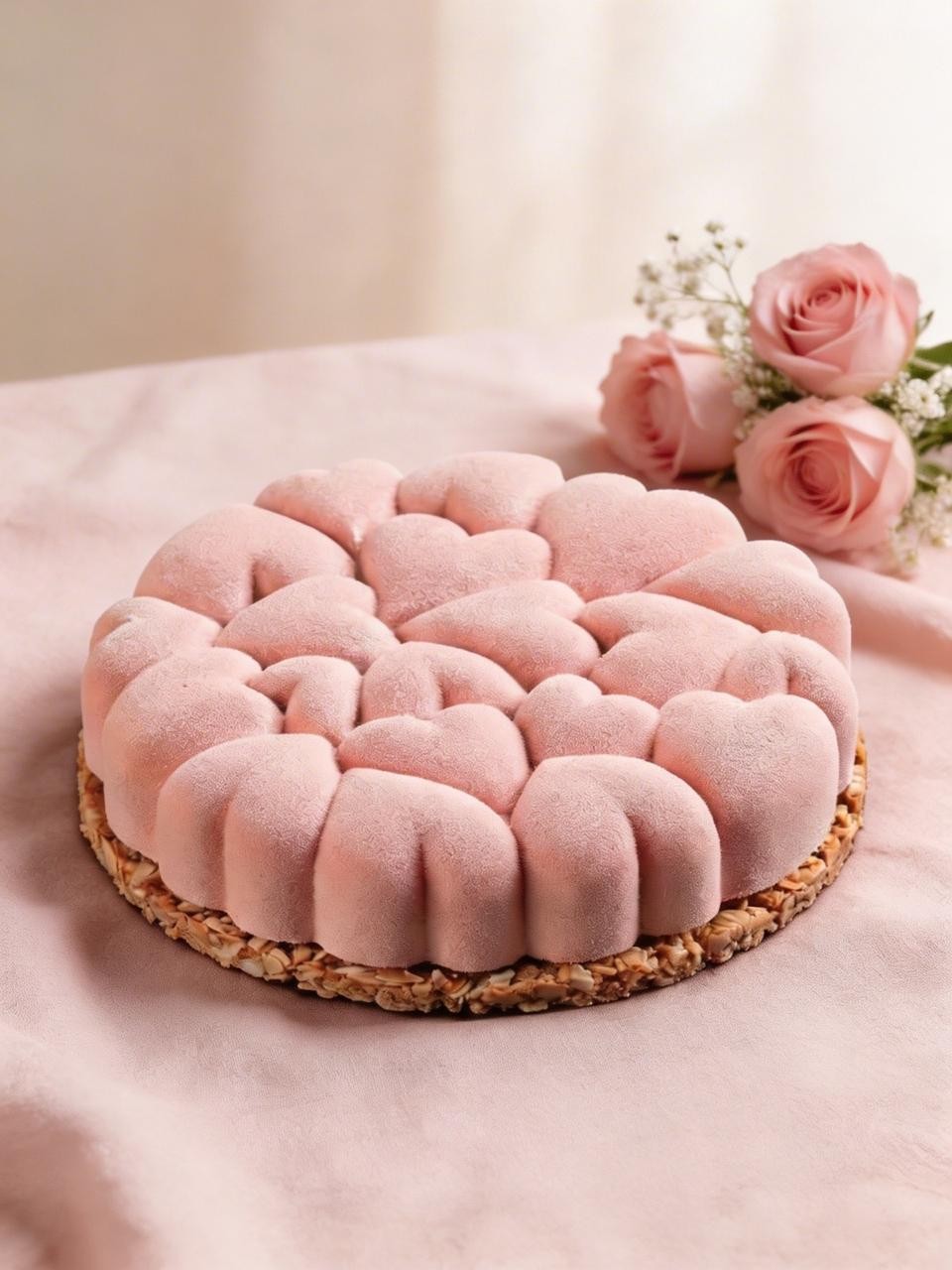
How did this concept originate, and what gap in the Lebanese market were you aiming to fill?
It actually started from something very personal—I’ve always been someone who cares about what I eat, but I also love indulgence. And in Lebanon, I felt like you were constantly forced to choose either “healthy” but boring and restrictive, or delicious but heavy and guilt-driven. There was no middle ground that felt elevated, intentional, and honestly… worth it. That’s where ENN came in. I didn’t want to create just another “healthy
dessert brand.” I wanted to build an atelier—something curated, thoughtful, almost like a fashion house but for food. Every detail matters: ingredients, texture, how it makes you feel after, even the aesthetic of the experience. The gap was clear to me: people here are becoming more aware, but they’re not willing to compromise on taste or experience. And I agree with them. Youshouldn’t have to.
- Your menu focuses on vegan, gluten-free, and sugar-free desserts. How challenging was it to balance health-conscious ingredients with indulgent taste?
Honestly, it’s the hardest part of what we do—and also what makes ENN
what it is. Working with vegan, gluten-free, and sugar-free ingredients is very
limiting if you approach it traditionally. You don’t have the “easy wins” like
butter, refined sugar, or gluten to carry texture and flavor. So every recipe
becomes a process of rebuilding dessert from scratch—understanding
ingredients on a deeper level, testing obsessively, and refusing to settle for
“it’s good… for healthy.” Because I don’t believe in that standard.
For me, if it doesn’t taste indulgent, it doesn’t go on the menu—period. I’d
rather not sell it. And that means we’ve had to be very patient. Some items
took dozens of trials to get right, just to reach that balance where you don’t
feel like you’re compromising.
But that’s also where the magic is. When someone tries an ENN dessert and
says, “this is healthy?!”—that’s the reaction I’m after. Not because it’s
surprising, but because it proves that you actually can have both.
- You describe ENN as “created by sisters, inspired by women.” How has that dynamic shaped your brand identity and business decisions?
Building ENN with my sister means there’s a level of honesty and intuition in
our decisions that you can’t really replicate in a traditional business setup. We
challenge each other a lot, but there’s also deep trust. If something doesn’t
feel right, we don’t force it—and I think that’s why the brand feels so
authentic.Being “inspired by women” comes very naturally to us, because we are the
client. We understand her moods, her habits, her contradictions. She wants to
feel healthy, but she also wants to enjoy. She’s disciplined, but she’s
emotional. So every decision—from the menu to the packaging to the tone of
voice—is made with her in mind.
It also shaped how we built ENN: we didn’t rush, we didn’t over-expand, and
we didn’t follow trends blindly. We grew it in a way that felt aligned with our
lifestyle and our values.
At the end of the day, ENN is very personal. It’s a reflection of how we live,
how we think, and how we believe women today want to experience food.
Building ENN with my sister means there’s a level of honesty and intuition in
our decisions that you can’t really replicate in a traditional business setup. We
challenge each other a lot, but there’s also deep trust. If something doesn’t
feel right, we don’t force it—and I think that’s why the brand feels so
authentic.
- Lebanon has a strong traditional pastry culture. How have customers responded to your reinterpretation of desserts in a healthier format?
We didn’t try to replicate traditional desserts exactly, and we didn’t position
ourselves as a “healthier version of” anything. Instead, we leaned into fusion
and innovation—taking familiar flavors people grew up with and reimagining
them through a completely different lens. Cleaner ingredients, different
textures, unexpected pairings. It felt new, but still somehow familiar.
And over time, something interesting happened. Concepts that initially felt
“too different” started becoming more accepted—almost mainstream. You
begin to see similar ideas, flavor combinations, even the whole “clean
indulgence” positioning being picked up by much bigger and older names in
the market.
- What were the biggest operational or sourcing challenges when launching a concept built around specialized dietary offerings?
Honestly, the concept itself is already operationally demanding—but
building it in Lebanon, during everything we’ve been through, took it to
another level. From day one, sourcing was one of our biggest challenges. When
you’re working with specialized ingredients—gluten-free flours, plant-based
alternatives, natural sweeteners—you’re not dealing with what’s readily
available in the local market. Most of it is imported, which means you’re
exposed to currency fluctuations, delays, and inconsistency in supply.
Then came the economic crisis. Overnight, everything shifted to dollars while
the market you’re selling to is still thinking in local currency. So you’reconstantly balancing: how do you maintain quality without pricing yourself out
of your own market? That’s a daily decision, not a one-time strategy.
And on top of that, we went through two wars. Which means interruptions you
can’t plan for—logistics freezing, shipments getting delayed, uncertainty in
operations, even just maintaining a sense of normalcy within the team. You’re
not just managing a business at that point, you’re managing stability.
What this forced us to do is become extremely adaptable. We had to build a
flexible supply chain, always have alternatives, think ahead, and sometimes
make very tough calls without compromising the integrity of the product.
- Your products often highlight being “guilt-free.” How do you approach consumer education around health, nutrition, and indulgence?
I’m actually very careful with the term “guilt-free,” because I don’t believe food should come with guilt in the first place.
For us, it’s more about awareness than restriction. We educate indirectly through transparency in ingredients, through how our products make you feel, and through consistency in quality. People start to understand that indulgence and health don’t have to be opposites.
- How do collaborations, seasonal collections, or delivery platforms (like Toters) play a role in your brand visibility and revenue streams?
Collaborations and seasonal collections are how we keep the brand evolving. I don’t do them just for noise or exposure. If it doesn’t feel aligned with ENN, we don’t do it. But when it is aligned, it creates excitement, brings in a new audience, and keeps our existing clients engaged.
Seasonal drops, especially, allow us to be creative without overloading the core menu. It keeps things fresh but still controlled.
As for platforms like Toters, they’ve been important for accessibility and volume. They bring convenience and reach—people discover you there before they even step into your space.
But I don’t rely on them to build the brand. They support revenue, yes—but the real brand experience happens directly with us. That’s something I’m very intentional about protecting.
- Looking ahead, do you see ENN evolving beyond pastries—perhaps into a broader wellness or lifestyle brand?
We’ve already stepped beyond pastries with our ice cream, and that was a way to prove that ENN isn’t about one category—it’s about a mindset.
We do see it growing into a lifestyle brand over time, but very selectively. We’re more interested in building something cohesive and lasting than expanding fast.