
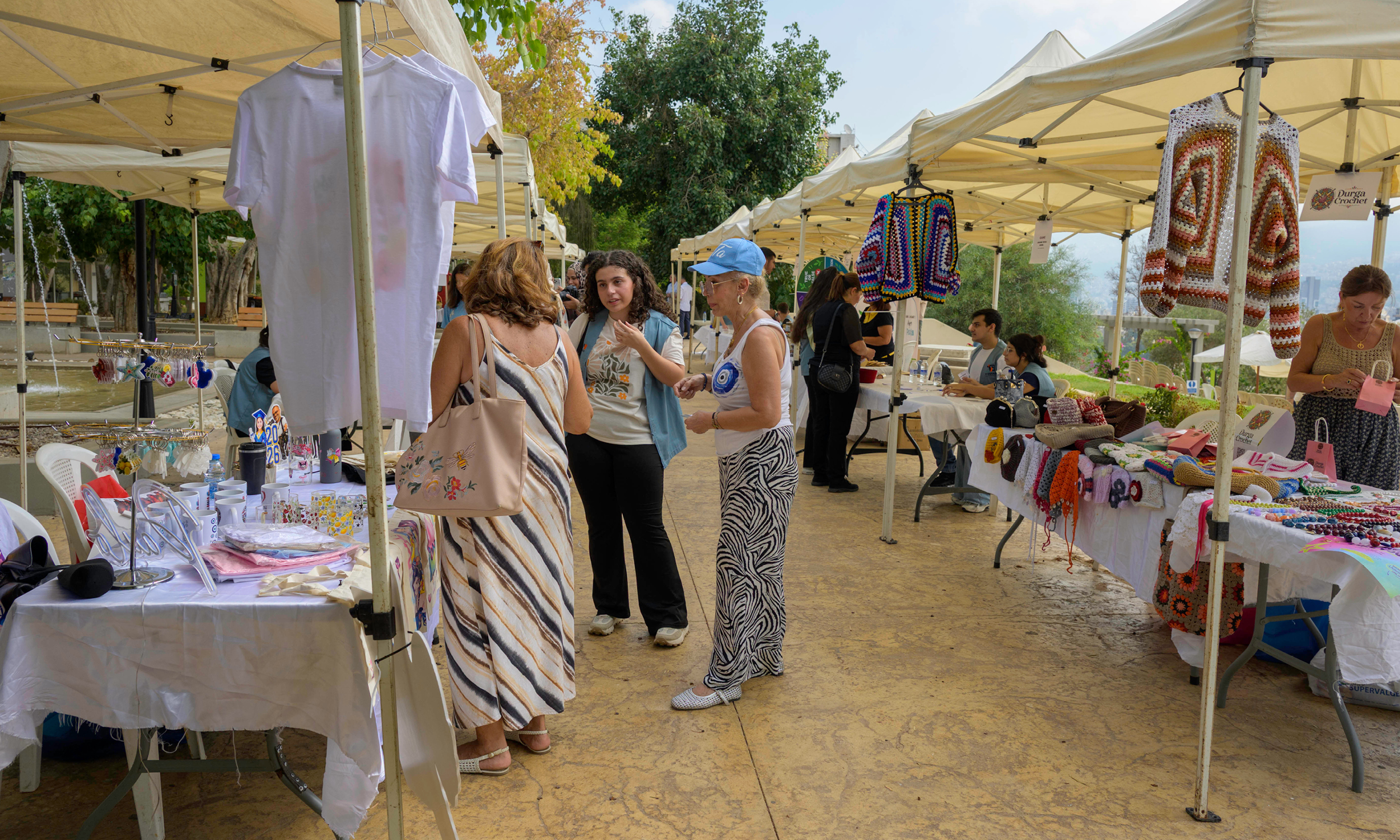
The Environment and Sustainable Development Unit (ESDU) in the Faculty of Agricultural and Food Sciences (FAFS) at the American University of Beirut (AUB) hosted the Feeding the Future Festival on Saturday, September 12, 2026, at the Patriarch Ignatius IV Hazim Garden in Sioufi, Beirut, Lebanon. The festival provided a platform to celebrate the value of legumes and highlight their role in advancing more sustainable and resilient food systems in Lebanon.
Held as the closing event of the RE-LEAF (Fostering Rural Areas through Enhancing the Efficiency of Legume Value Chain for Agribusinesses and Small-Scale Farmers) project, the event showcased the project’s achievements and impact through a farmers’ market offering direct sales, alongside educational activities, a panel discussion, and a live cooking segment. The festival aimed to enhance market opportunities for project beneficiaries and other local producers, raise awareness about the nutritional and cultural significance of legumes, engage a wider network of producers and stakeholders beyond the immediate project participants, and foster knowledge exchange between farmers, consumers, researchers, and community members.
Opening remarks highlighted the importance of collaboration across agriculture, nutrition, tourism, industry, research, and community development. Speakers included Dr. Lara Nasreddine, who spoke on behalf of Dr. Ammar Olabi, FAFS dean; Dr. Shady Hamadeh, ESDU director; Dr. Mohammad Abou Zeid, director of plant production at the Ministry of Agriculture; Dr. Maria Awad, inspector at the Ministry of Tourism; Dr. Pascale Lahoud, concept creator and TV host at LBCI; and Dr. Samar Morkos, RE-LEAF project coordinator. The event was also attended by Marwan Jawhar, head of the Industrial Licensing Department at the Ministry of Industry.
A central feature of the festival was the farmers’ market, which brought together project beneficiaries and other local producers from rural Lebanon. The market provided visitors with an opportunity to discover and purchase locally produced goods while creating direct connections between producers and consumers. Educational game booths complemented the market, offering interactive opportunities to learn about legumes, food systems, nutrition, and sustainable agriculture.
The program also featured a panel discussion, The Future of Legumes in Lebanon: Food, Agriculture and Sustainability, moderated by Dr. Pascale Lahoud. The panel brought together Bahaa Kadamani, founder and managing director of Grapeful; Omar Khaddaj, reporter and TV presenter of Al Jadeed’s Back to the Pantry (العودة إلى النملية) program; Dr. Carla Habib Mourad, assistant research professor at FAFS; and Barbara Massaad, author and president of Slow Food Beirut.
A live cooking demonstration and tasting led by Chef Balkis Othman, also known as Set Balkis, followed, showcasing the versatility of legumes and their connection to Lebanese cuisine. Throughout the day, visitors also participated in educational and recreational activities designed to engage children, young people, families, and the wider community.
The RE-LEAF project, funded by DROSOS Foundation, worked to foster rural development and strengthen the efficiency and sustainability of Lebanon’s legume value chain across three years. By working with farmers, producers, cooperatives, and other actors in the value chain, the project sought to strengthen local production, expand market opportunities, and create pathways toward more resilient and sustainable food systems.
The relationships built and the knowledge and experiences gained through the RE-LEAF project provide a foundation for continued collaboration on sustainable agriculture and local food production in Lebanon.
About AUB
Founded in 1866, the American University of Beirut bases its educational philosophy, standards, and practices on the American liberal arts model of higher education. A teaching-centered research university, AUB has more than 790 full-time faculty members and a student body of over 9000 students. AUB currently offers more than 140 programs leading to bachelor’s, master’s, MD, and PhD degrees. It provides medical education and training to students from throughout the region at its Medical Center that includes a full-service 365-bed hospital.
Stay up to date on AUB news and events.
aub.edu.lb |Facebook |X
About ESDU
The Environment and Sustainable Development Unit (ESDU) at the American University of Beirut works at the intersection of agriculture, food systems, environment, and community engagement. Through applied research, education, partnerships, and field-based initiatives, ESDU seeks to translate knowledge into practical solutions that support sustainable development and resilient communities.
Learn more about ESDU: https://esduaub2025.github.io/ESDU_25/
About RE-LEAF
RE-LEAF (Fostering Rural Areas through Enhancing the Efficiency of Legume Value Chain for Agribusinesses and Small-Scale Farmers) was a project funded by DROSOS Foundation that focused on fostering rural development and enhancing the efficiency and sustainability of Lebanon’s legume value chain. The project worked to support local producers and strengthen the systems and relationships that contribute to more sustainable and resilient food production.
Learn more about RE-LEAF: https://www.aub.edu.lb/fafs/esdu/Pages/RE-LEAF.aspx