
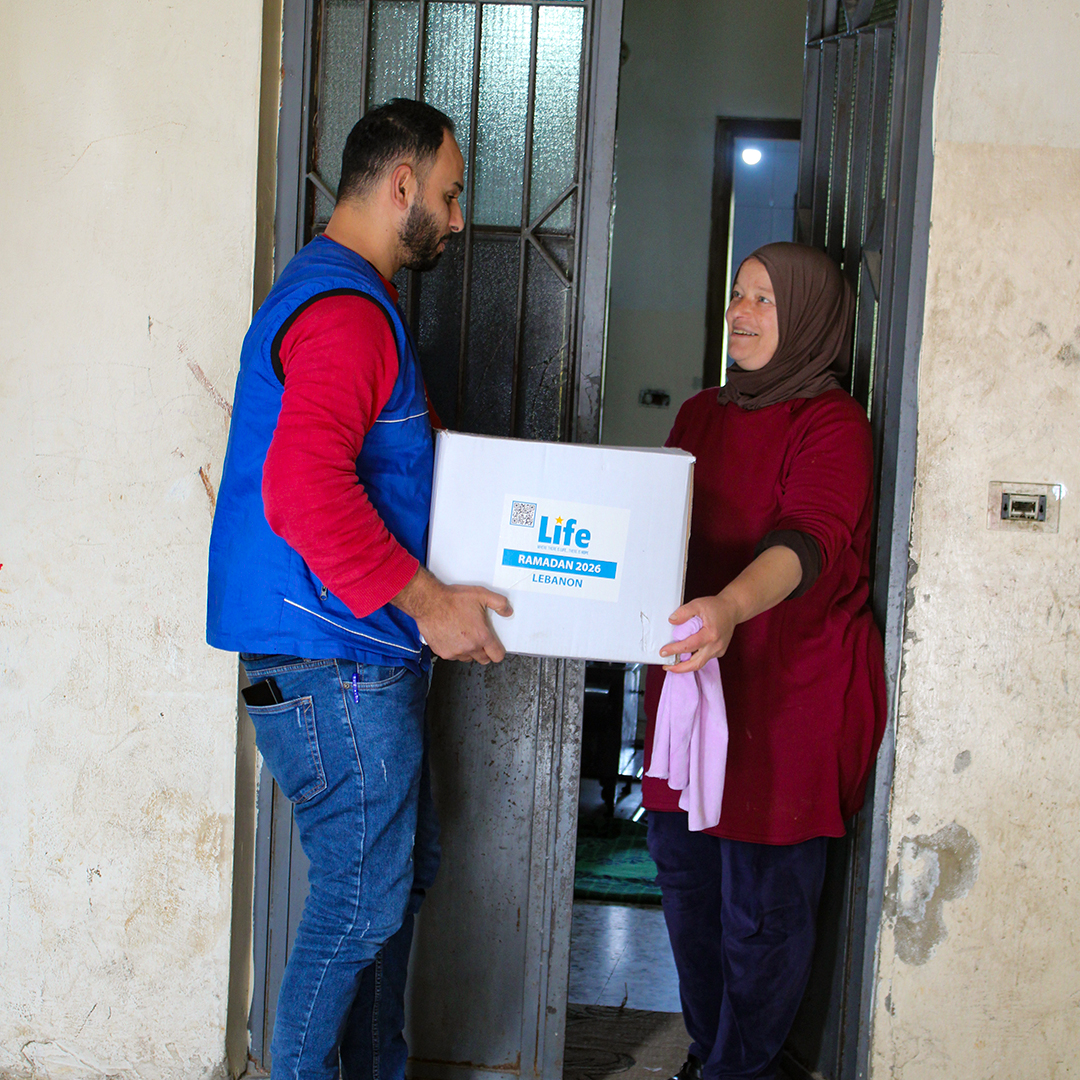
As daily developments accelerate in Lebanon and the broader Middle East, this Ramadan finds approximately 2.7 million people in need of food assistance out of around 5.3 million in Lebanon. Nearly 874,000 people (about 17% of the population) are experiencing severe food insecurity, with that number expected to rise to roughly 961,000 (18%) this year. Reports from the Food and Agriculture Organization (FAO) and UNICEF confirm that the ongoing war, declining purchasing power, rising food prices, and the impact of conflict on agriculture and infrastructure have forced a large segment of civilians—including Lebanese families and refugees—to rely on aid to meet their basic food needs.
Targeting the Poorest Communities in Affected Areas
Humanitarian initiatives occur every year, with varying levels of impact—some alleviate immediate need, while others cannot fully address the depth and complexity of the crisis.
For 33 years, LIFE for Relief and Development has mobilized its efforts to fulfill its humanitarian mission during Ramadan by implementing charitable relief programs focused on meeting the essential needs of the poorest and most vulnerable families. This includes distributing food parcels and organizing Iftar meals, reaching hundreds of thousands of families in need across the globe. LIFE’s teams have operated in 37 of the 60 countries where it runs sustainable relief projects. During Ramadan 2025, nearly 6 million meals were distributed through 16,000 comprehensive food baskets, alongside 51,000 freshly prepared hot meals, benefiting approximately 97,000 fasting individuals.
Refugee Camps: The Silent Hunger
From Lebanon, Mr. Mohammad Al-Sharif, coordinator of LIFE’s office, states: “The nutritional situation in refugee camps, particularly among widows and children, is alarming. Around 37% of Syrian refugees (515,000 people) and nearly 30% of Palestinian refugees (67,000 people) face severe food insecurity, in addition to 15% of displaced Lebanese. Most families in these camps rely on food assistance. With limited employment opportunities and rising food prices, UNICEF reports warn of increased malnutrition risks among children due to poor dietary diversity and declining purchasing power. This makes these populations among the most nutritionally vulnerable in the country, with some forced to subsist on one meal a day—or less.
In response, our teams in northern Lebanon (Akkar – Tripoli) provided nutritionally complete food baskets weighing nearly 50 kg to 1,088 families, alongside freshly prepared hot meals for 700 individuals. In southern Lebanon, food baskets and hot meals were distributed to 2,035 families among displaced and affected populations.”
LIFE Between Ramadan and Seasonal Projects
Regarding this year’s planned activities, Omar Mamdouh, Director of Projects, says: “We will intensify our teams’ efforts in the poorest regions, those at risk of potential famine according to UN reports. We plan to support vulnerable families and displaced persons in crisis areas, strengthening social solidarity and bringing joy through feeding programs, Iftar events, and distribution of hot meals and food baskets in remote areas beyond the reach of most charitable organizations.
Ahead of Eid, we will implement orphan sponsorship projects by providing clothing, gifts, and financial and food support. We distribute Zakat and Sadaqah to the most deserving, alongside Fidya and Kaffara contributions.”
Third Place Among Top Institutions Fighting Poverty and Hunger
Vicky Rob, Director of International Programs, adds: “We are intensifying feeding projects in developing countries, especially in refugee camps where children suffer, as seen on the Pakistan-Afghanistan border, conflict-affected areas in Sudan and Africa, and regions suffering silent poverty in Southeast Asia, among others.
LIFE uniquely plans to reach areas that most humanitarian organizations cannot access, whether due to harsh conflict—as in Gaza, Sudan, and Lebanon. Our teams delivered Ramadan meals and baskets on foot, by boat in flood-affected Bangladesh, and by horse in Afghanistan despite difficult terrain, and in Tanzania, our teams spent days away from their families to reach regions facing hunger and food shortages, where infants silently suffer. The teams used multiple modes of transport to ensure food delivery before the holy month began.”
It is noteworthy that LIFE has been ranked this year among the top ten global humanitarian organizations combating poverty and making tangible impacts on the ground, according to international reports for 2026.