
Beirut, 20 September 2026 :
In “Dunia”, Nada Abou Farhat returns to the stage in a role that traces the fault lines between duty and desire, motherhood and identity, sacrifice and selfhood. At its center is a woman confronting a question that has long been deferred: after a life shaped around others, what remains of the person she once imagined herself to be?
Written and directed by Ziad Najjar, the production has been playing at Théâtre Tournesol in Beirut since 16 September and runs there until 27 September, before transferring to Théâtre Athénée in Jounieh and later to Al Madina Theatre in Beirut.
Dunia is a particular woman, but the play resists treating her story as an isolated one. Through her, Najjar opens onto a wider landscape of female experience: lives shaped by love, motherhood, expectation, compromise, postponed ambitions and the quiet accumulation of choices made for others.
The drama finds its protagonist at a moment of inward reckoning. Having inhabited so many roles and met so many demands, Dunia is brought back, almost inevitably, to herself. The question that follows is both intimate and unsettling: what remains of the woman she was, the woman she intended to become, and the woman she might yet reclaim?
Nada Abou Farhat anchors the production with a performance that moves between resilience and fragility, humour and pain, composure and rupture. Much of the character’s emotional life is allowed to emerge in the spaces between words, giving the performance an intimacy that is central to the piece.
Music is woven into the dramatic structure rather than used as ornament. Performed live on piano by Ziad Najjar, the original score follows the shifts in Dunia’s inner life, deepening moments of silence and emotional fracture until it becomes, in effect, another voice within the production.
The staging favors a visual and sensory language in which performance, movement, music and image are held in careful balance. There is little interest in overt statement. Instead, the production leaves room for recognition, allowing audiences to encounter in Dunia a mother, a wife, a daughter, a lover, a friend — or perhaps something more private and familiar.
Moving between wit, confrontation and moments of emotional sincerity, “Dunia” considers the selves we construct through the roles we accept, the compromises we make and the paths we leave unexplored. Beneath it all lies the distance between the life once imagined and the life ultimately lived.
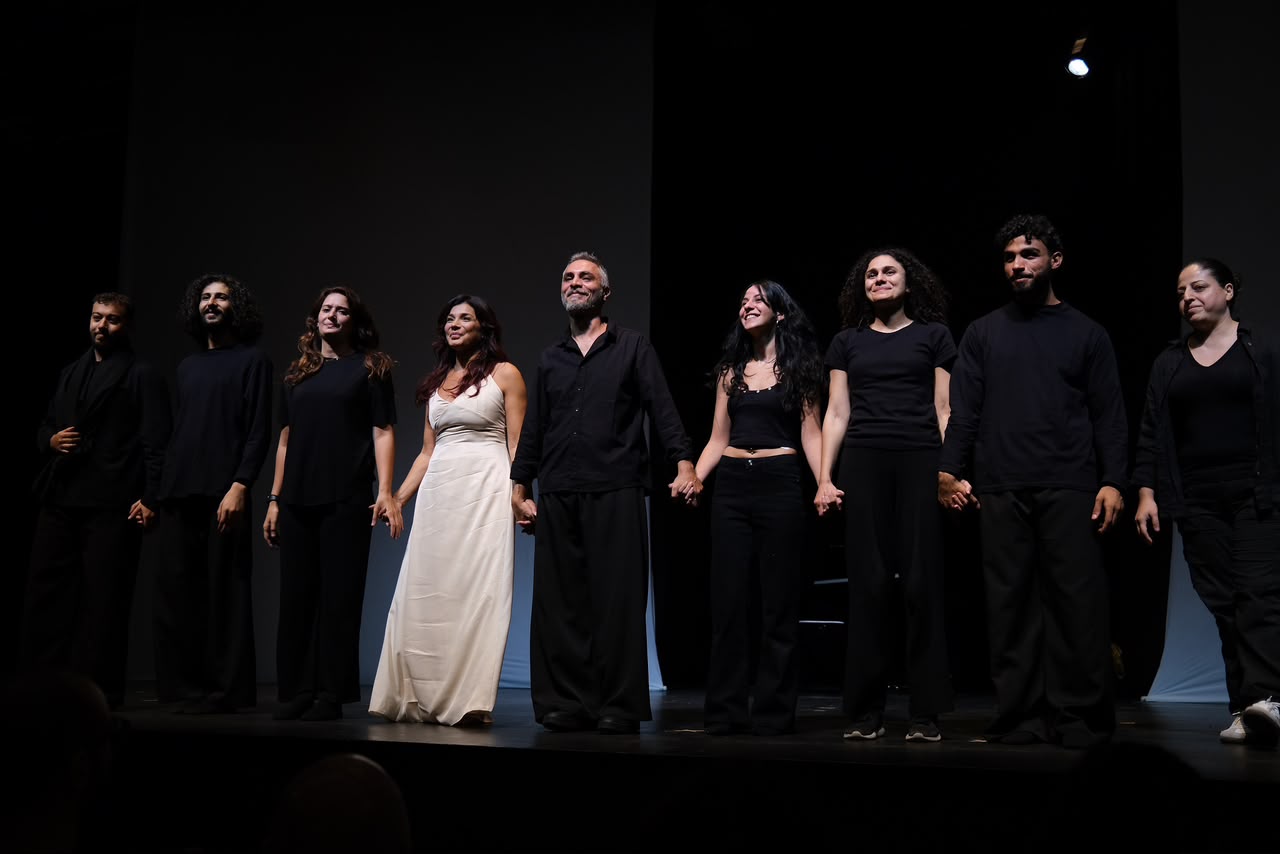
“Dunia” stars Nada Abou Farhat, with Christa Meidahas the daughter. The play is written and directed by Ziad Najjar, with choreography by Tamara Hawi and live piano performed on stage by Ziad Najjar.
Performances continue at Théâtre Tournesol until 27 September 2026, followed by dates at Théâtre Athénée in Jounieh from 8 to 18 October, then at the Safadi Cultural Center in Tripoli on 6, 7 and 10 November, before moving toAl Madina Theatre in Beirut from 19 to 22 November 2026.
Tickets are available from Librairie Antoine or directly on 03 782 718.
In every woman, there is a Dunia.