
Middle East, October 15, 2026 – Artificial intelligence could unlock more than $1 trillion in economic and sustainability value across the Middle East and North Africa (MENA) by 2030, according to Unlocking Value: AI for Resilient Growth in MENA, a new World Economic Forum report developed with Bain & Company. The report examines how the region can translate AI ambition into sustainable economic value through practical use cases, stronger governance and cross-sector collaboration.
The estimate spans five value pools: up to $200 billion in sustainable financing, $370 billion in sustainable investment flows enabled by the public sector, $250 billion in long-term asset losses avoided, $90 billion in increased valuation through improved sustainability performance for the energy sector, and $100 billion in sustainable projects launched through cross-sector partnerships.
The report was developed through the World Economic Forum’s Leaders for a Sustainable MENA community and Bain. It draws on case studies and prototype development with First Abu Dhabi Bank (FAB), the Ministry of Sustainable Development of the Kingdom of Bahrain, Abu Dhabi National Oil Company (ADNOC), and the Ministry of Economy and Planning of the Kingdom of Saudi Arabia, spanning financial services, the public sector, energy and cross-sector collaboration.
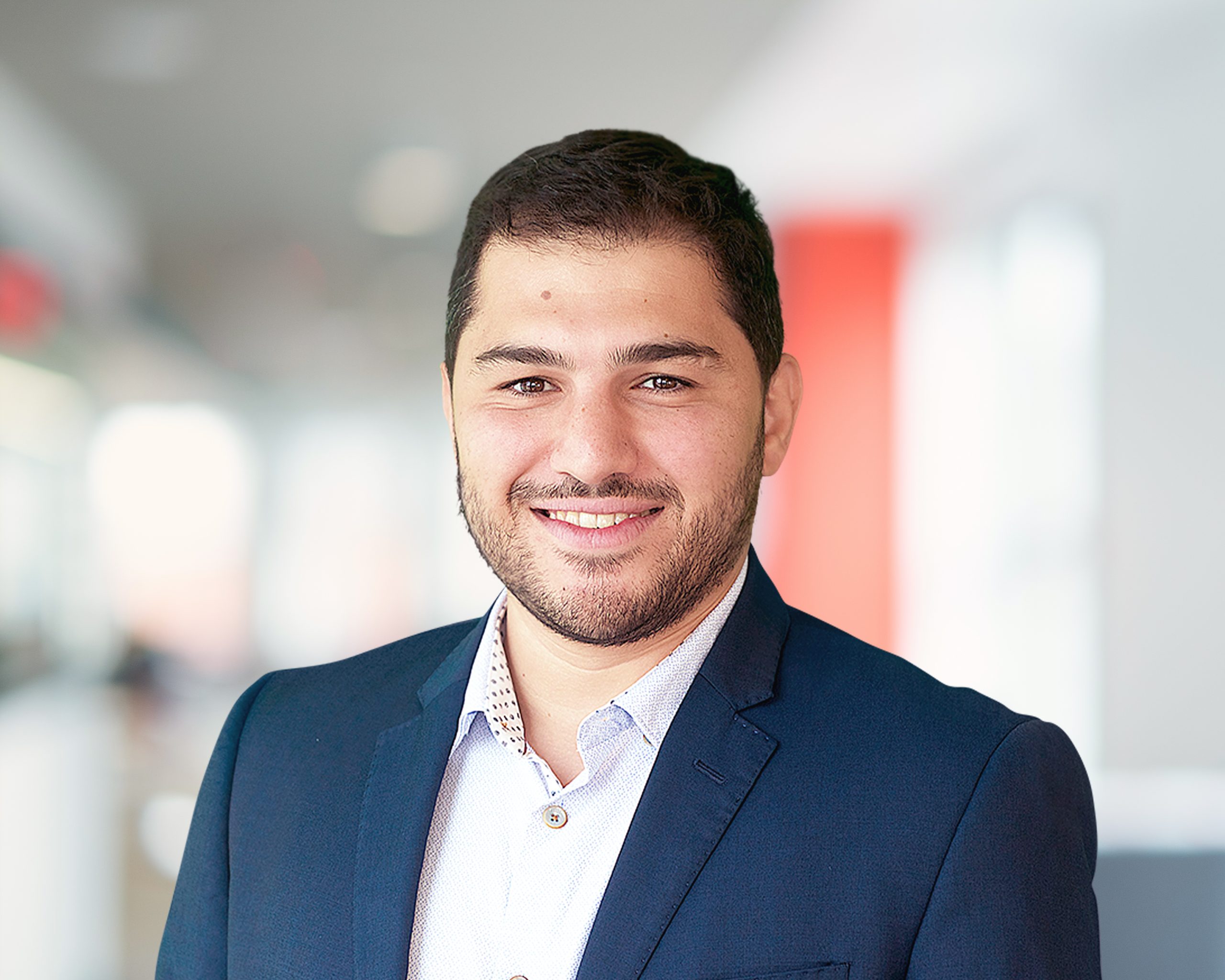
“The opportunity for MENA is significant, and the value will come from execution,” said Wissam Yassine, Partner and Middle East Sustainability practice leader at Bain & Company. “Across finance, energy and the public sector, we are seeing AI use cases that can deliver measurable economic and sustainability impact. Leaders should focus on the areas with the clearest value and move quickly from pilots to scale.”
A large opportunity, but a clear execution gap
The report identifies a significant gap between AI’s perceived potential and implementation. In a recent MENA Chief Sustainability Officers Network survey, 89% of respondents said AI has high or very high potential to advance their organizations’ environmental, social and governance goals, yet only 40%-55%, depending on the use case, described their sustainable AI adoption as piloting or scaled.
The report highlights three top structural roadblocks: lack of a systematic approach and robust decision-making processes, difficulty treating sustainability as a value-creation lever, and a tendency to use AI for incremental rather than transformational improvements. Many organizations also struggle to quantify financial or sustainability return on investment.
Regional case studies show how AI can create value
In banking, FAB, the World Economic Forum and Bain developed the Sustainable Finance Market Pulse (Pulse), an AI agent that scans thousands of market signals each week to identify high-potential sustainable finance opportunities. The report estimates that Pulse could generate approximately 50-135x ROI over five years for FAB. If Pulse and the broader Sustainability Intelligence Platform were leveraged across MENA, they could unlock around $200 billion in additional regional sustainable lending by 2030.
In Bahrain, the Ministry of Sustainable Development, the World Economic Forum and Bain developed SME SMART, an AI-powered sustainability readiness assessment for small and medium-sized enterprises. With adoption and implementation of its recommendations, the report estimates the tool could drive $17 million in cumulative valuation uplift for Bahraini SMEs through 2030, with up to $3 in overall value realized for every $1 invested in building the tool. More broadly, AI applied across the public sector’s sustainable investment value chain could help unlock around $370 billion by 2030.
In the energy sector, the sprint with ADNOC examined two AI-enabled solutions. The Resilience Intelligence Suite translates climate hazard data into decision-ready insights across interconnected assets and value chains, while the Sustainability Performance Navigator analyzes sustainability disclosures against ESG rating frameworks to identify performance gaps and prioritized actions.
In Saudi Arabia, the Ministry of Economy and Planning worked with the World Economic Forum and Bain on SUSTAIN, an AI-enabled platform designed to match verified organizations with partnership opportunities linked to national development priorities. Bain analysis suggests the incremental value of financial and non-financial partnership opportunities across MENA could accumulate to $100 billion by 2030.
What leaders should do next
Among the lessons the report highlights: treat sustainability as a value-creation lever; use AI to reimagine workflows rather than make incremental improvements; experiment broadly, then quickly prioritize the highest-value use cases; connect business, technology and sustainability teams; and give sustainability leaders a meaningful role in strategic and technical decisions.
To put those lessons into practice, the report sets out a five-step roadmap: assess AI maturity; define a clear sustainable AI ambition; identify and rapidly prototype priority use cases; quantify impact and determine the right scale of deployment; and institutionalize the approach through clear governance and accountability.
The report also calls for deeper public-private partnerships, stronger knowledge-sharing networks and continued investment in capabilities.
The full report, Unlocking Value: AI for Resilient Growth in MENA, is published by the World Economic Forum in collaboration with Bain & Company.
About Bain & Company
Bain & Company works with leaders worldwide to solve their toughest challenges and deliver enduring results. Since 1973, we’ve partnered with clients, including private equity and portfolio companies, to build the capabilities they need to stay ahead of change and help them redefine their industries. We measure our success by our clients’ success, and we proudly hold the highest levels of client advocacy in our field.
Bain is consistently recognized globally as one of the best places to work. We operate as one global team, uniting strategists, industry and functional experts, technologists, and advisors with a vibrant ecosystem of technology partners.