
With a career spanning banking and finance, construction, public-sector investment and international real estate development, William Charo has built a professional path at the intersection of capital, strategy and long-term development.
A graduate of the Lebanese American University (LAU), Charo holds a Bachelor of Science in Banking and Finance and a Master of Business Administration (MBA). His academic journey has also included executive education at Harvard University, where he completed the Entrepreneurship in Emerging Economies program, and Oxford Saïd Business School, where he pursued a program focused on Economic Development. Charo began his professional career as a Corporate Analyst at Lebanon and Gulf Bank, gaining first-hand experience in corporate banking and financial analysis. He later joined SHARING, a construction company, where he continues to hold a senior leadership role.
His career also extended into the public sector when he was appointed by the Lebanese Council of Ministers as a Board Member of the Investment Development Authority of Lebanon (IDAL), serving from 2019 until 2026. The position gave him extensive exposure to investment promotion, economic development and the relationship between public policy and private-sector investment.
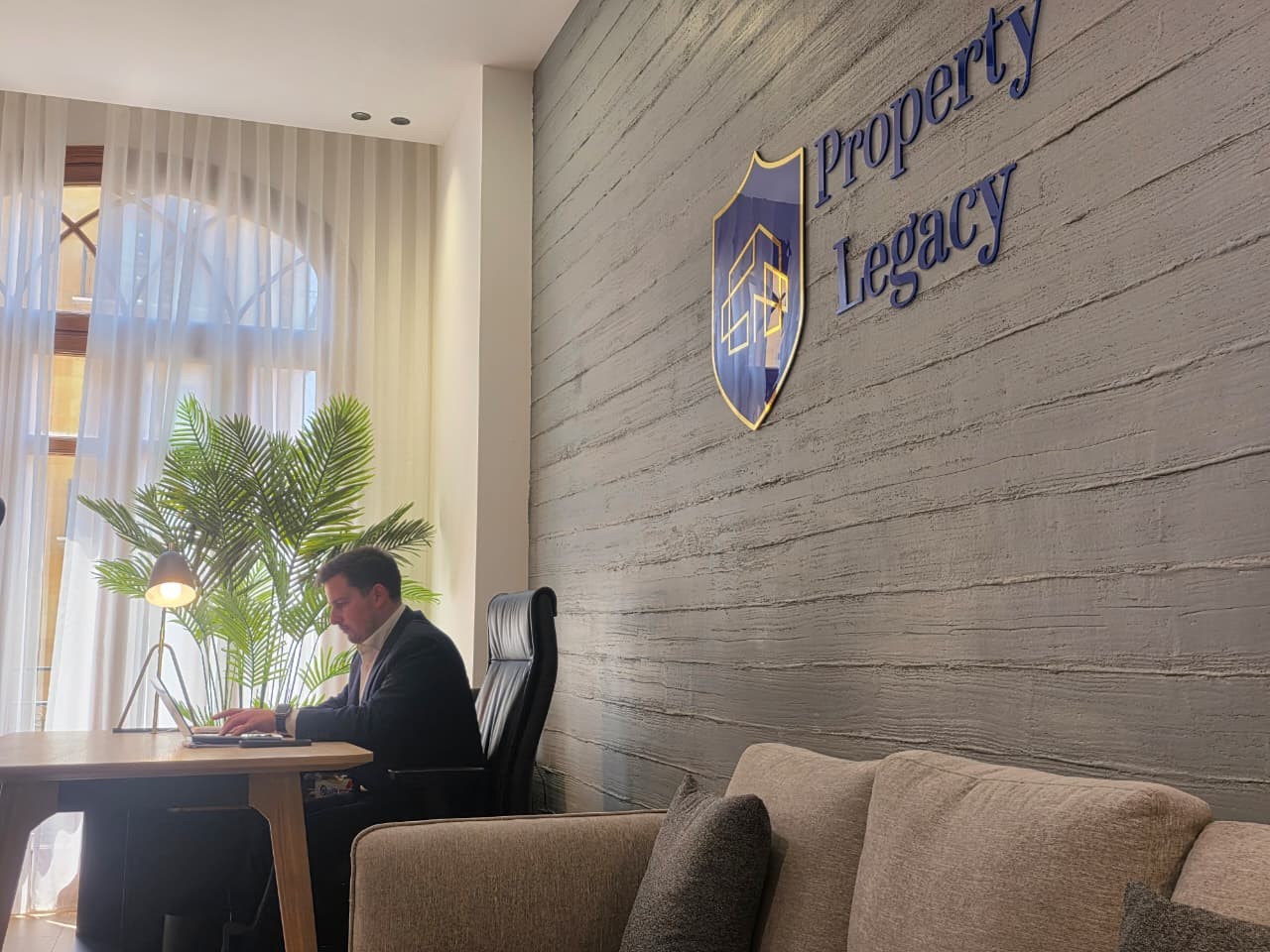
In 2022, Charo joined Property Legacy as Managing Partner, marking a new chapter focused on international real estate development. The company has since launched and developed projects across Greece and Cyprus, with a portfolio encompassing completed developments and an expanding pipeline of ongoing projects. Today, Cyprus represents a particular focus of its development activity.
Drawing on this multidisciplinary experience, Charo approaches investment with a perspective shaped by financial discipline, development expertise and an understanding of how different markets evolve.
Q&A with William Charo
Your career has taken you from banking to construction, public-sector investment and international real estate. How have these different experiences shaped your approach to business?
Each experience added a different dimension to the way I understand business and investment. Banking gave me a strong foundation in financial analysis and risk assessment. Construction taught me about execution and the realities of delivering projects. My years at IDAL provided a broader perspective on economic development and the interaction between investors and the public sector. Today, in international real estate, I bring all these perspectives together when evaluating opportunities and developing projects.
You began your career as a Corporate Analyst at Lebanon and Gulf Bank. What did banking teach you that you still apply today?
Banking taught me discipline. As a Corporate Analyst, you learn to look carefully at financial performance, understand business models and evaluate risk objectively. That analytical mindset has remained very important throughout my career. Whatever the sector, you need to understand the fundamentals behind an opportunity before making a decision.
You also built significant experience in the construction sector through SHARING. How did that influence your transition into real estate development?
Construction gives you a very practical understanding of development. You learn that a successful project is not only about the initial concept or the financial model; it is also about execution, timelines, quality, costs and the ability to solve problems as they arise. That experience has been particularly valuable in real estate development because it allows me to look at projects from both an investment and an execution perspective.
From 2019 to 2026, you served on the Board of IDAL. What did that experience teach you about attracting investment?
It gave me the opportunity to understand investment from a national and institutional perspective. Attracting investment requires more than identifying opportunities. Investors need confidence, clarity, a supportive business environment and a long-term vision. It also showed me how important cooperation between the public and private sectors can be in creating economic opportunities.
Having experienced both the private and public sectors, what do you believe governments sometimes misunderstand about investors?
Investors need predictability. Opportunity is important, but so are transparency, stability and the ability to understand the environment in which you are investing. Governments need to think not only about attracting capital but also about creating the conditions that allow investors to remain, grow and reinvest over the long term.
In 2022, you joined Property Legacy as Managing Partner. Why was international real estate the natural next step for you?
Real estate brought together many elements of my previous experience: finance, construction, investment and market analysis. Property Legacy also gave me the opportunity to apply that experience internationally and participate directly in identifying, developing and delivering projects across different markets.
Property Legacy has developed projects in Greece and Cyprus. What attracted you to these markets?
Both markets presented interesting opportunities, but every investment decision needs to be based on fundamentals rather than simply geography. We look at demand, location, economic trends, the regulatory environment and the long-term potential of each project. Our experience in Greece and Cyprus has allowed us to develop a deeper understanding of these markets and build a growing portfolio.
Why has Cyprus become a particular focus for your development activity?
We see strong potential in Cyprus and have developed valuable market knowledge and experience there. From an investment perspective, the market is particularly attractive because of the combination of competitive rental yields and strong potential for capital appreciation, which compares very favorably with many other established real estate markets.
As our portfolio has grown, so has our ability to identify opportunities and understand what different segments of the market are looking for. For us, Cyprus offers an interesting balance between current returns and long-term value creation, which is why we continue to expand our presence and pipeline of projects there while remaining disciplined about where and how we invest.
What do you look for when evaluating a real estate development opportunity?
I look first at the fundamentals: location, real demand, development potential, financial viability and the broader direction of the market. But I also look at what value we can add. A successful development should have a clear purpose and respond to a genuine market need rather than simply follow a trend.
How does your background in finance affect the way you approach real estate?
It keeps the decision-making process disciplined. Real estate can be very emotional because people naturally respond to locations, architecture and concepts. But from an investment perspective, the numbers still need to make sense. Financial discipline helps ensure that enthusiasm for a project is supported by realistic assumptions and a clear understanding of risk and return.
Your executive education has included programs at Harvard and Oxford. How did those experiences influence your thinking?
They provided different perspectives on entrepreneurship and economic development, particularly in markets undergoing transformation. They encouraged me to think beyond individual transactions and consider the broader forces shaping economies, investment and business opportunities. They also reinforced the importance of adapting international experiences and ideas to the realities of each market.
How do you assess opportunities in markets facing economic or geopolitical uncertainty?
Uncertainty does not necessarily mean there are no opportunities. In many cases, periods of change can create them. The important thing is to remain disciplined: understand the risks, distinguish between temporary volatility and structural trends, and avoid making decisions based purely on sentiment. You need to know what risks you are taking and why.
What is your philosophy when it comes to investment?
I believe in creating sustainable, long-term value. An investment should make financial sense, but I am also interested in its ability to remain relevant and create value over time. This requires patience, discipline and the willingness to walk away when the fundamentals are not right.
After working across several sectors and markets, what has become the most important principle in your leadership style?
Clarity and honesty. Whether you are managing a company, developing a project or working with partners, people need to know where they stand. Difficult decisions are part of business, particularly in challenging markets. I believe they should be made decisively, communicated clearly and always approached with integrity.
Looking ahead, what do you see as the next chapter of your professional journey?
The focus is on continuing to grow our international real estate development activity, particularly in Cyprus, while remaining open to opportunities in other markets where we believe we can create value. I want to continue bringing together the different elements of my experience—finance, construction, investment and development—to build projects that are commercially successful and sustainable over the long term.