
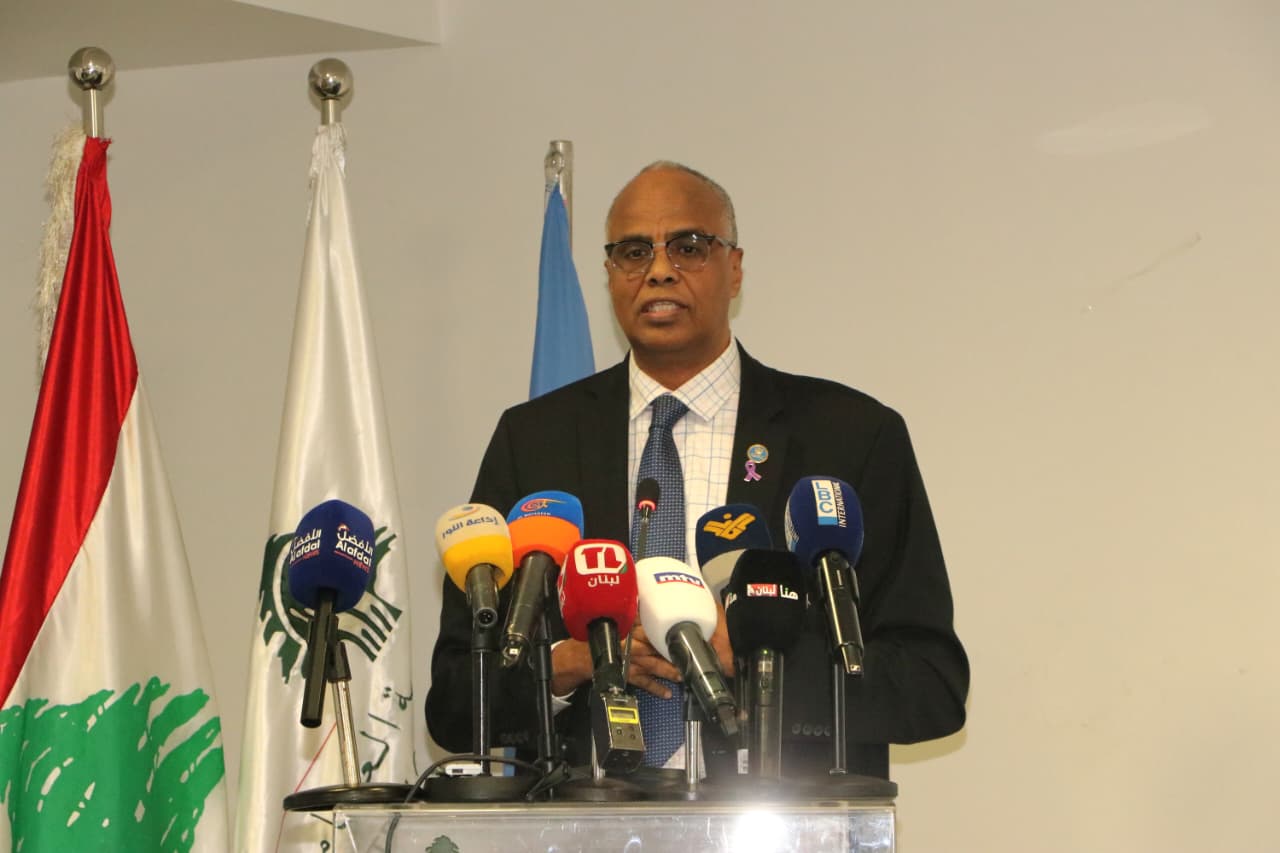
Beirut 10 February 2026: On the occasion of World Cancer Day, the Ministry of Public Health, in partnership with the World Health Organization and national stakeholders, got together leaders, experts, and advocates to reaffirm Lebanon’s commitment to strengthening cancer prevention, early detection, treatment, and survivorship. The event highlighted both the progress achieved under the National Cancer Plan 2023 – 2028, and the urgent need to consolidate governance and invest in sustainable cancer control amid ongoing national challenges.
Speaking at the event, Dr. Rakan Nassereddine, Minister of Public Health said,“The Ministry of Public Health is firmly committed to placing cancer prevention, early detection, and equitable access to care at the heart of our national health agenda. Despite the challenges Lebanon faces, we will continue to work with our partners to strengthen governance, protect patients’ rights, and build a resilient cancer control system that leaves no one behind.”
WHO Representative in Lebanon Dr. Abdinasir Abubakar emphasized that cancer is not only a medical condition but a societal challenge that tests the strength and equity of health systems. He underscored WHO’s long-standing partnership with Lebanon, particularly during periods of crisis, noting the organization’s role in safeguarding access to life-saving cancer medicines and supporting over 4,000 adult and pediatric patients since 2022. Dr. Abubakar also highlighted WHO’s investments in long-term system strengthening, including digital governance tools, pooled procurement mechanisms, and support to the National Cancer Registry, ensuring that cancer policies are guided by reliable data and aligned with global standards. “Between 30 and 50 percent of cancers are preventable. Prevention is not only the most cost-effective intervention, but also the most humane one. Through strong partnerships, resilient systems, and informed daily choices, we can ensure that a cancer diagnosis in Lebanon does not mean loss of hope, but access to care and a future shaped by prevention.”
A central focus of this year’s World Cancer Day was prevention. With evidence showing that up to 50 percent of cancers are preventable, the event marked the launch of Lebanon’s first national awareness campaign fully dedicated to cancer prevention, aligned with WHO “Best Buys” on risk factor reduction. The campaign promotes healthy eating, physical activity, tobacco and alcohol control, and informed daily choices, while 2026 will be designated as a year of intensified action on cancer prevention, including colorectal cancer awareness and the introduction of HPV vaccination in the public sector.
Presenting the progress of the National Cancer Plan, Dr. Pierre Anhoury, Advisor to the Minister of Public Health, highlighted both achievements and pressing gaps. Updated data show 16,226 new cancer cases in 2024, with incidence having doubled over the past two decades. While access to cancer medicines has improved, along with notable progress in pediatric oncology, Dr. Anhoury stressed that governance remains fragile and must be urgently strengthened to protect the credibility and future impact of national cancer efforts. “Cancer incidence in Lebanon has doubled over the past twenty years, and while we have made important gains in access to treatment and pediatric care, the sustainability of our response depends on stronger governance, enforcement of prevention policies, and a fully empowered national cancer control structure.”
Looking ahead, Dr. Arafat Tfayli, Head of the National Cancer Program, outlined priorities for 2026, including reinforcing the national cancer registry, expanding prevention and screening campaigns, finalizing accreditation of oncology and radiotherapy centers, strengthening palliative and supportive care, and advancing survivors’ rights, including the “right to be forgotten.” He emphasized that formal recognition of the National Cancer Program within the Ministry of Public Health is critical to ensure sustainability beyond the upcoming elections. “Our focus for 2026 is clear: stronger data, stronger prevention, accredited and organized care, and real support for patients and survivors. Formal recognition of the National Cancer Program within the Ministry of Public Health is essential to protect these gains and build a future-ready cancer control system.”
The event concluded with a strong call for collective action, reaffirming that quality cancer care must remain a national priority and that prevention is the most cost-effective and humane response to the growing cancer burden.