
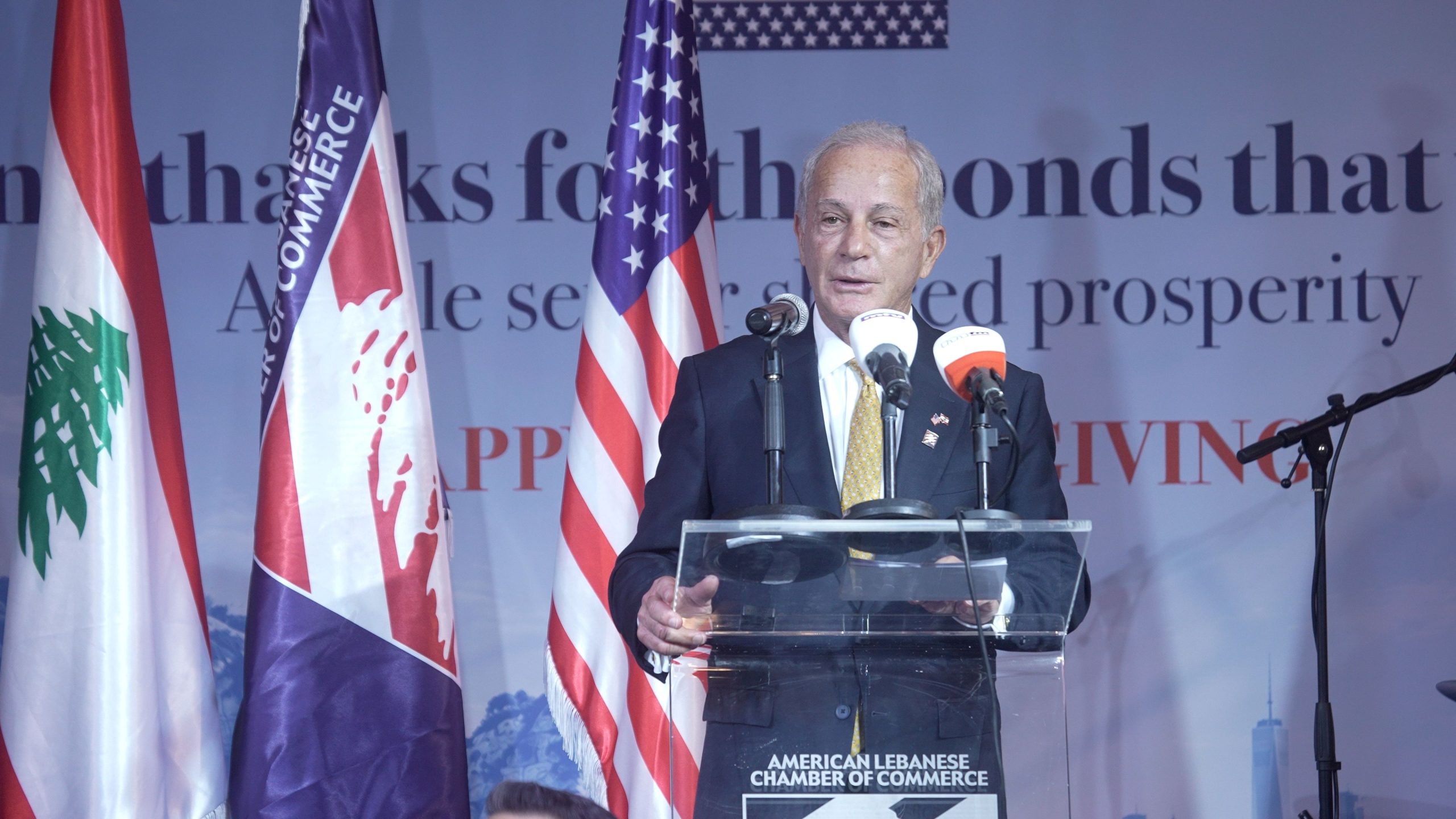
The American Lebanese Chamber of Commerce (AmCham Lebanon) hosted its first Thanksgiving dinner in honor of U.S. Ambassador to Lebanon Michel Issa, marking one year since he assumed his diplomatic duties in Lebanon. The event brought together a large number of government officials, diplomats, economic figures, and business leaders. The dinner provided an opportunity to reaffirm the strength of Lebanese-American relations, the importance of continuing to build bridges between the two countries, and the need to strengthen economic, trade, and investment cooperation, opening new horizons for businesspeople in Lebanon and the United States.
The evening opened with the Lebanese and American national anthems, followed by welcoming remarks from Jessy Abou Eid, Advisor to the Chairman. She welcomed the guests and emphasized that the occasion was an opportunity to highlight the historic partnership and the economic, cultural, and human ties that unite Lebanon and the United States.
Assaf:
In his remarks, AmCham Lebanon Chairman Walid Assaf expressed his appreciation to the United States and the American people for their continued support for Lebanon across various sectors, particularly their support for the Lebanese Armed Forces. He stressed that the relationship between the two countries goes beyond assistance: it is a friendship rooted in generations, and he highlighted the role of the Lebanese diaspora in strengthening that relationship.
He underscored the role of the Lebanese community in the United States in reinforcing these ties, describing it as an exceptional human bridge between the two countries. He said: “Lebanon’s true wealth has always been its people, with their creativity, resilience, and entrepreneurial spirit, and their ability to succeed wherever they go. Our hope is to create the conditions that will allow these same talents to build, invest, innovate, and thrive in their own country.”
Assaf added: “This year’s Thanksgiving dinner holds special significance, as it coincides with the first anniversary of Ambassador Michel Issa’s tenure as U.S. Ambassador to Lebanon. We thank you for your dedicated leadership, your tireless efforts, and your commitment over the past year to strengthening the longstanding and solid partnership between our two countries. We look forward to what we can achieve together in the years ahead.”
Zeenni:
AmCham Lebanon founder and Honorary Chairman Salim Zeenni recalled key milestones in the Chamber’s establishment and the vision on which it was founded: building a practical and sustainable bridge connecting the American business community with Lebanon’s potential.
He noted that, despite the challenges and hardships it had faced, the Lebanese private sector had neither surrendered nor abandoned its role. Instead, it had maintained its ability to invest, produce, and create jobs, stressing that Lebanon’s economic spirit could not be broken.
He welcomed the U.S. Ambassador, saying that his participation held particular significance: “You bring to the U.S. Embassy not only extensive diplomatic experience, but also a deep understanding of this country, as one of its own people and as a member of the business community. You understand what it takes to establish and grow businesses, take risks, and maintain faith in Lebanon’s potential and future.”
Zeenni also highlighted the role of Naaman Tayyar, Head of the Commercial Section at the U.S. Embassy, commending his contribution to strengthening economic and trade relations between Lebanon and the United States.
He also paid special tribute to the late U.S. Ambassador Vincent Battle, one of the most prominent supporters of U.S.-Lebanon relations, who chose to make Lebanon his permanent home and remained by its side until his final days.
Issa:
In his remarks, Ambassador Issa reaffirmed that the United States would continue to support a sovereign, secure, and prosperous Lebanon. He said: “Over the past year, we have made tangible progress, some of it historic. Thanks to U.S. efforts, representatives of Lebanon and Israel entered into direct talks. I took part in those talks and witnessed how both sides began addressing issues that have remained unresolved for decades. These discussions opened the way to address the return of detainees, border demarcation, and the security arrangements needed for communities on both sides of the border to live in peace.”
He said that “at times, Lebanon’s national interests have been subordinated to decisions and interests determined outside the country, with the Lebanese people paying the price.” He therefore considered that Lebanon has an opportunity to achieve peace, rebuild its economy, and create opportunities unprecedented in its history. However, the more its future is tied to decisions made abroad, the smaller its chances of achieving those goals.
He emphasized that the U.S. commitment to Lebanon extends beyond diplomacy, noting that the United States had invested approximately $600 million over the past year across a range of sectors, including security, economic development, education, humanitarian assistance, and support for Lebanese institutions. He added that the U.S. mission and its programs employ a large number of Lebanese people, helping them develop their professional skills and support their families. They also implement initiatives across Lebanon to support education, young people, and local communities and to expand economic opportunities. He further noted that the United States is working to mobilize support from its friends and allies and encourage other countries to contribute, invest, and stand with Lebanon, emphasizing that this is a fundamental part of his country’s commitment to Lebanon.
He continued: “Lebanon today stands at a crossroads. Its leaders have a responsibility to choose the right path, make difficult decisions, and commit to implementing them. This means ensuring that the Lebanese state can maintain security across all its territory. It also requires the courage to adopt a different approach when previous approaches have proven unsuccessful.”
He called for rebuilding a sound banking system that would restore depositors’ confidence and provide the financing needed for businesses seeking to expand. He also called for establishing an independent, trustworthy judiciary, alongside a transparent, fair, and corruption-free government. He stressed that postponing reform decisions directly affects investment decisions and may lead to delayed expansion plans or the relocation of investments to other countries.
Ambassador Issa also thanked Naaman Tayyar, Head of the Commercial Section at the U.S. Embassy, for his efforts and support for initiatives aimed at strengthening trade relations between the two countries.
The event also featured a video presentation tracing the history of AmCham Lebanon and key milestones in its journey, recalling the efforts of its founders. It also introduced the Chamber’s new Board of Directors and its aspirations to strengthen trade and investment partnerships between Lebanon and the United States and reinforce the role of Lebanon’s private sector.