
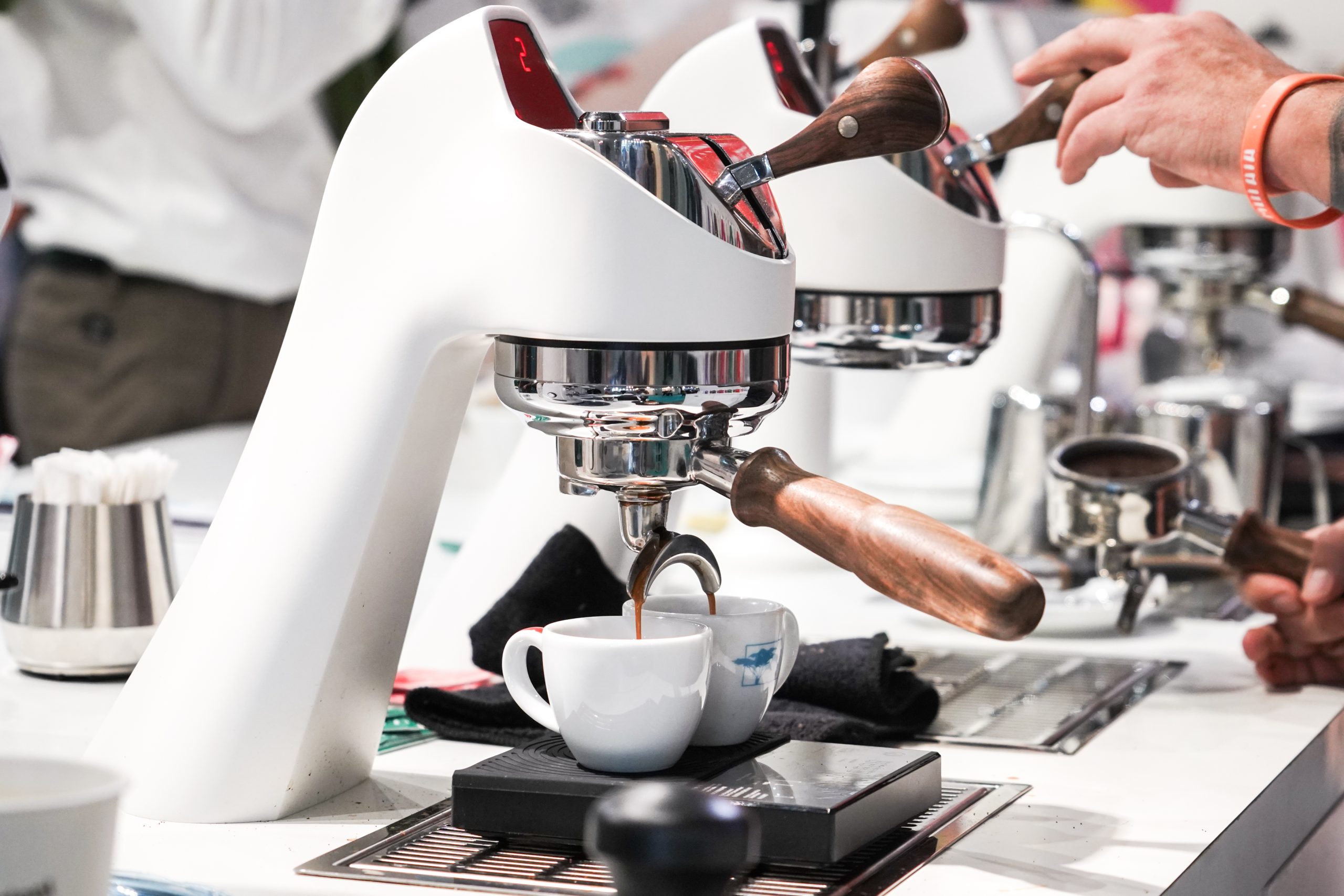
With the official recognition of the United Nations, International Coffee Day confirms coffee’s role as a major value generator, driven by the growth of specialty coffee, smart technology and high-quality raw materials. As the world celebrates International Coffee Day and ahead of the 2027 edition, HostMilano takes a look at a sector worth US$186 billion.
Milan, 2 October 2026 – This year, International Coffee Day received official recognition from the United Nations for the first time. The initiative, launched by the ICO – International Coffee Organization in 2015 in Milan during Expo, is celebrated worldwide on 1 October. It is further recognition of the importance of a sector that has long been a key feature of HostMilano, the next edition of which will be organised by Fiera Milano from 22 to 26 October 2027, and which supports the livelihoods of around 25 million farmers worldwide.
The figures for coffee consumption are equally impressive: more than two billion cups are estimated to be consumed around the world every day, in an increasingly diverse range of forms. According to the National Coffee Association, in the United States 47% of adults consume espresso-based beverages, while more than one in five daily coffee drinkers choose iced coffee. Elsewhere in the world, creativity takes many forms: in Vietnam, cà phê trứng is topped with whipped egg cream and condensed milk; in Scandinavia, kaffeost is made by pouring hot coffee over cubes of cheese; in Hong Kong, yuenyeung combines coffee with milk tea; while in Senegal, café touba is flavoured with cloves and Selim pepper.
Europe remains at the heart of global coffee consumption. According to the ICO, the region accounts for almost one third of worldwide consumption – 30.1% – making it the world’s leading coffee-consuming region. In Italy, the daily coffee ritual takes place more than twice a day: according to estimates by Unione Italiana Food based on Istat and NielsenIQ data, Italians drink an average of 792 espresso coffees a year, with 28 out of every 100 served out of home, in bars, restaurants and hotels.
International Coffee Day also provides an opportunity to look at the transformation taking place across the sector, which the world’s leading trade show for professional hospitality, out-of-home consumption and food retail is following in the run-up to its 2027 edition through the insights of the HostMilano Observatory – from the coffee bean to the cup, including the technologies that enhance its quality.
“The recognition by the United Nations confirms that coffee is now a shared cultural and economic heritage, connecting millions of producers with increasingly conscious consumers who care about origin, quality in the cup and the story behind what they drink,” says Francesca Cavallo, Head of Hospitality Exhibitions at Fiera Milano. “This growing awareness is affecting the entire value chain and making sustainability an increasingly important driver, from the energy efficiency of coffee machines to the traceability of raw materials. These are some of the themes that Host 2027 will put centre stage, bringing together technologies, coffee roasters and formats on a platform where innovation becomes a business opportunity.”
- FROM BEAN TO MACHINE: THE NUMBERS BEHIND A GROWING MARKET
According to Mordor Intelligence, the global coffee market will be worth almost US$186 billion in 2026 and is expected to reach US$239 billion by 2031, with a compound annual growth rate (CAGR) of +5.18%. Key growth drivers include the shift towards premium consumption and increasing attention to traceability and sustainable sourcing.
Italy plays a leading role in this scenario as Europe’s largest producer of roasted coffee, ahead of Germany. According to Eurostat data processed by the European Coffee Federation, Italian production exceeds 520,000 tonnes per year, accounting for around 27.5% of the EU total.
The strength of Made in Italy is equally evident in coffee technology. According to ExportPlanning, exclusively for the HostMilano Observatory, global trade in coffee machines and vending equipment reached €7.7 billion in 2025. As the world’s leading exporter, Italy accounted for €1.56 billion of this total, up 1.2% compared with 2024, representing around one fifth of the global market. Trade is expected to accelerate, reaching +3.5% in 2027 and an average annual growth rate of +4.7% in 2028–2029.
- SMARTER, MORE EFFICIENT MACHINES FOR PROFESSIONALS
The evolution behind the coffee counter is being driven by a dual requirement: helping every barista, from the most experienced to the newcomer, deliver consistent quality, even during peak periods, while at the same time reducing environmental impact.
The traditional espresso machine is therefore becoming increasingly intelligent. Digital parameter controls, thermal stability and automation work alongside the grinder-doser, adjusting extraction in real time and allowing the barista to focus on the craft, the story behind the product and a more valuable interaction with the customer.
Sustainability is also being addressed at the design stage, through Life Cycle Assessment (LCA) studies and new-generation thermal systems capable of significantly reducing energy consumption.
The coffee offering itself is evolving towards increasingly distinctive quality. Consumers are demanding greater transparency about origin, processing and supply chains, while specialty coffee is opening up new opportunities, including in segments that were previously considered niche, such as high-quality decaffeinated coffee and single-origin varieties.
- HEAR FROM THE INDUSTRY
These developments are confirmed by insights from industry leaders, gathered by the HostMilano Observatory as part of its research into trends leading up to Host 2027.
“We are witnessing a decisive shift in coffee from being a simple functional beverage, a commodity, to becoming a genuine consumption experience. Today’s increasingly conscious consumers are looking for storytelling and full transparency, so they can trace the journey of the bean from the plantation to the coffee shop,” explains Jacopo Bambìni, Group Marketing Director at Cimbali Group. “In this transformation, also driven by the rise of specialty coffee, the espresso machine becomes the cornerstone of the experience offered to the customer. Innovation in this area must necessarily be viewed through the lens of sustainability, which for us translates into ecodesign choices and rigorous protocols.”
This transformation is also reflected in growing international demand for high-end coffee machines.
“Demand for traditional espresso machines is growing particularly in markets where coffee is increasingly experienced as a cultural and premium product. Across these markets, the demand is similar: advanced traditional machines that combine cutting-edge technology, consistency and a strong design identity,” says Marco Feliziani, CEO of Simonelli Group. “At Simonelli Group, sustainability is an integral part of our design philosophy: a machine that operates with greater precision, stability and repeatability creates less waste, reduces operating costs and generates value over the long term.”
- QUALITY RAW MATERIALS AT THE HEART OF THE PROCESS
From the coffee counter, the journey continues upstream to the roasting stage, where quality increasingly depends on transparency about origin.
“Traditional espresso remains central to Italian coffee shops, but curiosity about coffees from different origins and new ways of tasting them is growing. A cup prepared and presented with expertise allows consumers to better understand its value,” says Cesare Trucillo, Head of Growth at Caffè Trucillo. “Transparency starts with knowing the origin of the coffees we purchase. In preparation for the new European deforestation requirements, we are strengthening the collection and verification of information from our suppliers, including data relating to production areas.”
Further upstream, quality also depends on decaffeination, a highly specialised segment that is becoming increasingly important in the market and involves processing green coffee before roasting.
“Decaffeinated coffee consumption is growing steadily, and this growth will increasingly enable the specialty coffee sector to offer high-quality decaffeinated coffees, including special selections and single-origin varieties,” observes Massimiliano Fabian, President and CEO of Demus, a company specialising in decaffeination and green coffee processing. “Rather than a single innovation, I would describe it as a continuous evolution of technology and techniques: improving process efficiency while increasingly preserving the coffee’s quality and aromatic characteristics. It is precisely this ongoing evolution that allows us to offer our customers – and ultimately consumers – an ever-better product.”
HostMilano has always dedicated a special role to the coffee and bar sector, with a particular focus on Italian excellence and its value chains. Within the Coffee-Tea and Bar-Coffee Machines-Vending macro-area, roasters, machine manufacturers and technology suppliers will meet buyers and professionals from around the world, in an exhibition journey highlighting the connections between different segments of the industry and featuring a rich programme of events, competitions and workshops.
More than 1,000 companies have already confirmed their participation, with an international share of 50%.
The 45th edition of HostMilano will take place at Fiera Milano, from 22 to 26 October 2027.
For the latest information: host.fieramilano.it, @HostMilano.
HostMilano at a glance
HostMilano is the world’s leading trade show dedicated to professional hospitality, out-of-home consumption and food retail.
Organised by Fiera Milano every two years, it brings together the leading international players in the sector, offering a comprehensive overview of the latest trends, technologies and innovations. With exhibitors from around the world and a programme packed with events, competitions, showcooking sessions and workshops, HostMilano is a global hub connecting supply and demand for professionals looking to network, stay up to date and discover the innovations that will shape the future of the industry.
The show is organised into the following macro-areas: Professional Catering; MIPPP – Milano Pane Pizza Pasta; SIC – International Coffee Exhibition, covering Coffee-Tea and Bar-Coffee Machines-Vending; Gelato-Pastry; Furniture, Technology and Tableware.
Thanks to its wide-ranging offer, from professional equipment to the most innovative formats, HostMilano is the event for industry professionals looking to anticipate trends and create new business opportunities.