
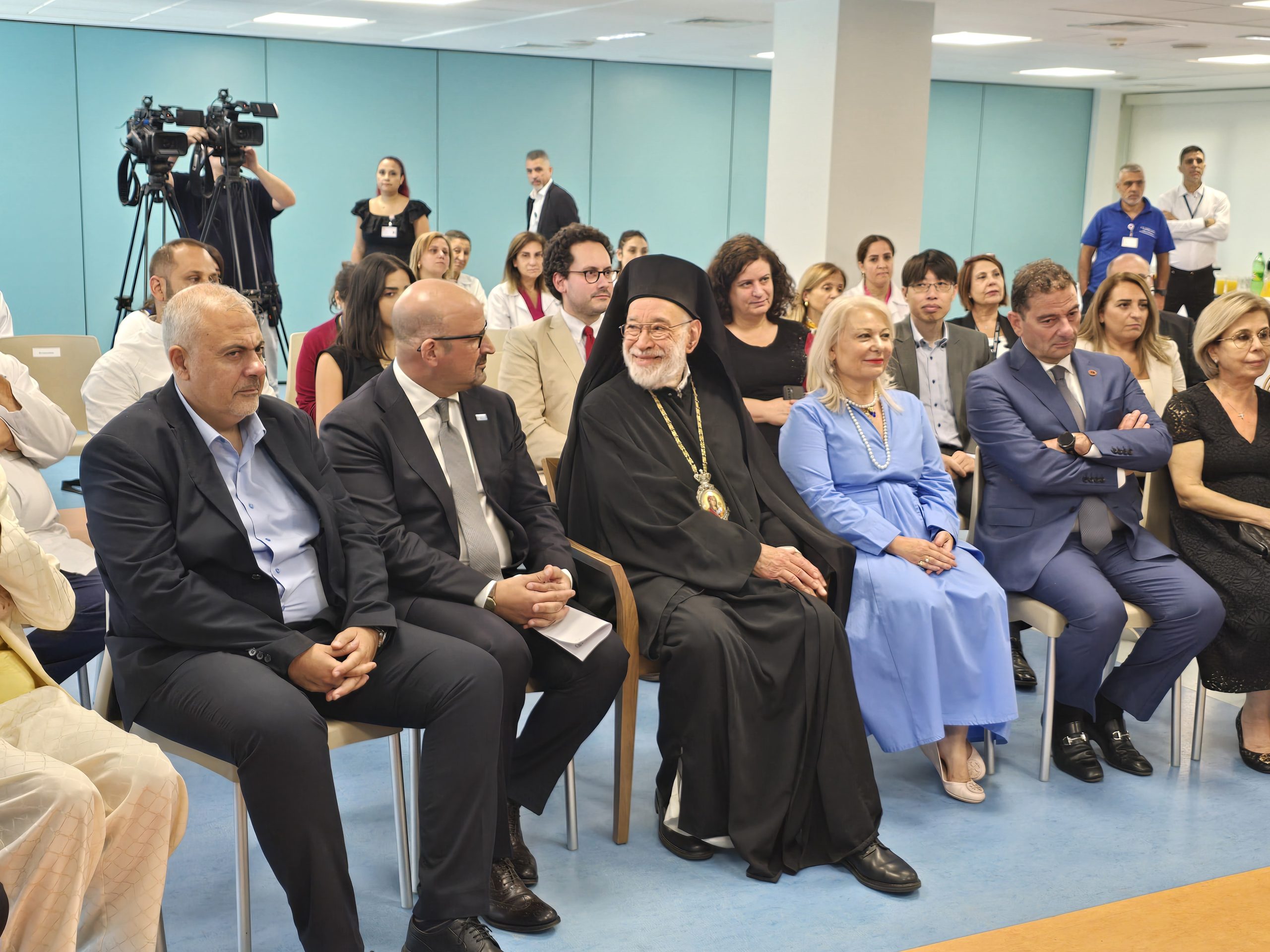
Beirut, Lebanon, 9 September 2026 — The Government of the Hellenic Republic, the World Health Organization (WHO) and Saint George University Medical Center (SGUMC) launched a new initiative to expand access to life-saving and limb-saving hospital care for vulnerable patients in Lebanon, while strengthening the hospital’s capacity to provide high-quality emergency, critical, surgical and neonatal services.
With a contribution of EUR 500,000 from the Government of the Hellenic Republic, through Hellenic Aid of the Ministry of Foreign Affairs, the 12-month initiative will integrate Saint George University Medical Center into WHO’s national Life-Saving and Limb-Saving Hospitalization Initiative and provide priority medical equipment to strengthen critical hospital services.
Lebanon’s health system continues to face significant pressures resulting from the country’s prolonged economic crisis, displacement, workforce shortages, fragile supply chains and recurrent conflict-related shocks. These challenges have increased financial barriers to accessing specialized and high-cost medical care, particularly for vulnerable and uninsured patients. The new initiative aims to address these barriers while reinforcing the capacity of a major tertiary referral and university medical center.
“This partnership demonstrates the importance of ensuring that vulnerable people can access the care they need when they need it, while simultaneously investing in the capacity of health facilities to deliver safe and effective services” said Dr Ahmed Zouiten, WHO Representative and Head of Mission in Lebanon.
Through the hospitalization component, WHO will support vulnerable and uninsured patients with life-threatening or limb-mobility-threatening conditions requiring emergency, critical, specialized or advanced inpatient care. This may include trauma, cardiac and other critical medical conditions, as well as neonatal cases requiring specialized care, including intensive care and neonatal intensive care, or requiring specialized neonatal transportation between hospitals.
The initiative will also strengthen the operational capacity of Saint George University Medical Center through the procurement and installation of priority medical equipment.
These investments will strengthen neonatal care during ambulance transportation, surgical and anesthesia services, and emergency response capacity, helping the hospital manage critically ill patients and complex, high-risk cases more safely and effectively.
“The Government of the Hellenic Republic, through Hellenic Aid of the Ministry of Foreign Affairs, is pleased to support this initiative as a tangible expression of solidarity with the Lebanese people in times of need. This support combines immediate assistance to vulnerable patients with a longer-term investment in Lebanon’s health system and the resilience of its hospitals. Greece will continue to stand by the Lebanese people and support Lebanon’s efforts towards recovery, resilience and stability”,said H.E. Despina Koukoulopoulou, Ambassador of Greece to Lebanon.
Saint George University Medical Center has a longstanding role as a major tertiary referral and university medical center in Lebanon. The facility was also directly and severely affected by the Beirut Port explosion in 2020 and continues its recovery from the devastating incident.
“As we continue to recover from the series of crises that hit Lebanon, the gift from our sisters and brothers in the Hellenic republic, and the partnership with World Health Organization will enhance our commitment to care for those who need it the most”, said Dr. Ziad Haydar, the Chief Executive Officer of Saint George University Medical Center.
Following that, Ms. Maya Hobeika, Director of Philanthropic Relations in the Hospital, explained the details of the program, highlighting the positive impact the project will have on the care of the most vulnerable patients as well as the processes to be used to ensure proper accountability and transparency.
His Eminence Metropolitan Elias Audi, Archbishop of Beirut and its Dependencies said in the occasion “…Therefore, we welcome the launch of this program, which aims to cover lifesaving and limb-saving medical cases. Saving a human life, or preserving a limb at risk, is not simply about treating a sick body. It is about safeguarding the dignity of a human person created by God in His image and likeness, preserving that person’s hope, protecting their family, and sustaining their ability to work and contribute. We therefore thank the World Health Organization for its partnership and commitment to serving people and their health, and we also thank the Greek Ministry of Foreign Affairs for funding this program”.
The project will be implemented by WHO Lebanon in close coordination with the Saint George University Medical Center, building on WHO’s established hospitalization support mechanisms and existing national health-sector arrangements.
The partnership reflects the shared commitment to protect access to essential health services and strengthen the resilience of Lebanon’s health system.